asazuke

Life in Japan, food, music, whatever…

Farmlog October 2011 21 December, 2011

Filed under: countryside,seasons — johnraff @ 1:22 am
Tags: , , , ,

Ha! Already Christmas breathing down our necks, and you still haven’t been told about all the thrilling happenings out on the farm in October and November. Hmm… well, here’s a bit about October to be going on with.

2nd~3rd

  • “Japan has four seasons” I remember being told in numerous drinking places soon after arriving here. Everyone wanted you to know just how unique this place was. It got so annoying, you started to make a point of saying how similar Japan was to wherever you came from: “Yes, we also use polite language when talking to someone older”, “Yes, we also have pickles…”, you get the idea. They’d smile politely but you could tell they didn’t like this sort of talk at all. You could criticise the country as much as you wanted, as long as you reminded them how different they were from you. But, to tell the truth, Japan does have four seasons, well five if you put the detestable Rainy Season in between Spring and Summer. I remember returning to the UK once for Christmas to find it a warm 15°C or so, another time shivering at 5°C in May, but here Summer is hot and Winter is cold. Each season is quite distinct, and the other day we switched from Autumn to Winter. It’s cold. (is what all that was about)
  • The tatami replacement project is getting under way. Ikemoto san the builder has been round and will start the actual work next week or so, so we’ve got to clear all the stuff out of those rooms, moving it upstairs. It’s at times like this that you realize how many things you acquire over time. Half-read magazines, souvenirs from Guam or somewhere and wounded musical instruments that can’t really be played, but there’s no way you’re going to throw them away. Luckily we haven’t run out of space yet.
  • Min temp. 10°C max 24°C

9th~10th

  • A perfect Autumn day. The sky is that gorgeous translucent blue that the Japanese have the cheek to call “Nihon baré” (Japan clear) as if noone else had blue skies…
  • Not quite as cold in the evening as it was last week. We build a good fire and sip warm shochu. T drinks too much and wakes up in the morning with a hangover. This is unusual for her.
  • Monday morning is perfect too. There’s a noisy flock of birds in the trees opposite, till they move off further down the road. Immigrants from the Northern Winter somewhere?
  • Must clear the house up ready for the carpenters. All the dust sets off a sneezing fit.
  • The focus on weedcutting in the summer has left lots of other unwanted growth untouched: the “susuki” pampas grass and ferns growing between the tea bushes (this must be cut down before the snow comes), bushes round the entrance drive, wisteria vines trying to strangle everything, plum, camelia and maple trees to prune…
  • There’s pretentious “progressive” rock on the FM radio all day (Atom Heart Mother, Yes, Deep Purple with an orchestra…) it’s a special programme for the holiday. I like the early Pink Floyd, but clearly the Good Old Days weren’t always all that great. Turn it off.
  • The leeks in the supermarket are from China. They could have been grown in the empty fields around here, but it’s cheaper to import them.
  • Overall, a nice Autumn day, with gentle background music from the crickets.
  • Min temp. 6°C max 21°C

16th~17th

  • The ferns grow between our tea bushes. They die off in the winter but when it snows they flop over the tea to make a cover like a balaclava helmet. The tea bushes don’t like being kept in the dark like this, so those ferns have to be cut down now. Big black hornets are doing the rounds of the last tea blossoms. They’re OK as long as you don’t bother them. Whatever constitutes “bother” to a wasp…
  • The “goya” vine is finished.
  • Ikemoto san has almost finished the reflooring in the house. There’s a lot of scrap timber in front of the house so we can have a good fire and stay warm outside. Dinner al fresco won’t be possible much longer though.
  • Monday starts off with a chilly mist, but warms up.
  • Spent an hour picking a kilo or so of those hot little “Ishigaki” chillies. This would obviously not be a commercial proposition.
  • Min temp. 9°C max 20°C

23rd~24th

  • A strange return of the summer humidity after the rain. Sweating!
  • Every week without fail, when we pass their favourite spot the police are booking someone for speeding.
  • Burn more timber and eat outside – stars, insect voices and a heavy dew.
  • There are still leeches around!
  • Our friend Yamada san has heard about out reflooring and phones to offer advice – we should polish it with rice bran in a cloth bag. T used to do this as a child and says it’s incredible hard work, so we ask Ikemoto san to wax it instead.
  • There are smelly “kamemushi” insects everywhere.
  • T picks persimmons for drying.
  • The Habanero and Ishigaki chillies are still looking fit, as are the big mild peppers, but the “Malay” medium chillies haven’t done well this year for some reason.
  • Min temp. 7°C max20°C

31st

  • We drop in on the way back from a trip to Eiheiji and Fukui.
  • The chillies are still looking happy.
  • Our new floor looks nice, nails hidden and stained to match the rest of the room.
  • The weather has cleared after a rainy Sunday, but by 4:30PM it’s thoroughly chilly.
  • My favourite “3rd beer” Mugi to Hoppu now has a Black version which isn’t bad at all, but only a limited issue apparently.
  • Min temp. 5°C max 23°C
 

Persimmons 25 November, 2011

Filed under: countryside,food & drink,seasons — johnraff @ 2:03 pm
Tags: , , ,

Maybe this fruit’s not too well known outside the Far East – it’s about the size of a small apple, bright red-orange and a bit crunchy. (I’m not that crazy about them personally.) There are two kinds: sweet and bitter. The bitter ones are incredibly astringent (tannin) and quite inedible. It feels as if your mouth is being turned inside out. However, if you dry them they miraculously become sweet! The result is something like dried dates or figs. The tree behind our country house is the bitter variety but this year there’s been a huge crop (they produce heavily on alternate years) and Taeko’s been hanging up some of them to make dried persimmons, out on our Nagoya veranda where the washing usually goes. Last time she did that she was eating them every day (they are a bit too sweet for me) and put on 10Kg, so this time she’s giving most of them away to friends and relatives.


Kippers and Custard 16 November, 2011

Filed under: customs,food & drink,music — johnraff @ 2:08 pm
Tags: , , ,

It’s probably another of those “you’ve been in Japan too long when…” things when you start liking enka. Let’s face it – there’s plenty not to like. The melodies all sound the same, there are usually only two or three chords, the singers get hyper-emotional and the lyrics are mostly about broken love affairs. Still, when you think about it, all that could be said about the Blues, one of my favourite kinds of music since Clapton was reading the Beano on the cover of that John Mayall album. Enka’s another of those hybrid music forms (like reggae, rai, bhangra…), a sort of crossing of Japanese folk tunes with Western instruments, usually lots of keyboards, drums, an orchestra somewhere and a screaming lead guitar in the distance. The singers use the same kind of vocal embellishments you hear in min’yo folk, and some of them are actually quite good, once you get used to the sticky sentimentality of it all.

There’s even an American enka singer called Jero. I think his grandmother’s Japanese, but he’s a real native-English-speaking American, backwards baseball cap and everything. Really good singer though, in perfect Japanese. Now, what I’m getting to is: the other day on the car radio someone put on an enka song sung in English – not by Jero as it turned out, but by a Japanese singer. It’s on Youtube if you want a listen. It’s horrible. Doesn’t work at all. OK there might be some problems with the English translation itself, or possibly with the guy’s pronunciation, though it doesn’t sound that bad, but the basic issue is that enka just sounds wrong in English. Doesn’t work.

It’s the same with food. There are many kinds of soy sauce made all over Asia – Thai light soy and Indonesian sweet kecap manis are delicious, for example – but if you want to eat sashimi, raw fish, then nothing but Japanese soy sauce will work. It will just taste wrong dipped in anything else. Now, I have to agree that Koreans also have good raw fish, eaten with garlic and chilli paste as well as soy sauce, but if you regard that as a separate dish then my case still stands. Also for location. Now that sushi (different from sashimi btw) is popular worldwide there are “sushi restaurants” everywhere. The other week on TV there was a restaurant somewhere in Europe maybe, dark wood panelling, customer sitting at a small marble table being brought sushi on a tray by a dark-suited waiter… NO! NO! That’s ridiculous. You have to eat sushi sitting at a counter in a small place where the man who makes it is standing opposite you choosing the choicest morsels of fish from the glass case between you. Preferably while sipping sake, though beer might be grudgingly permitted.

João Gilberto once said that bossa nova had to be sung in Portuguese. Some things just don’t go.


Farmlog 11th~26th September 2011 5 November, 2011

Filed under: countryside,food & drink — johnraff @ 3:23 pm
Tags: , , , , , , ,

It might still feel like Summer here in Nagoya on this warm November day, but this record is already going back two months, and Winter will be on us in no time. Anyway…

The first weekend (4th & 5th) we stayed in Nagoya because Daihachi Ryodan had one of our increasingly infrequent gigs, this time in a converted warehouse at a traditional sake brewery where they were putting on what turned out to be a pretty enjoyable event, with market stalls and lots of little kids running around, along with the music. People seemed to enjoy our stuff too, which is always encouraging.

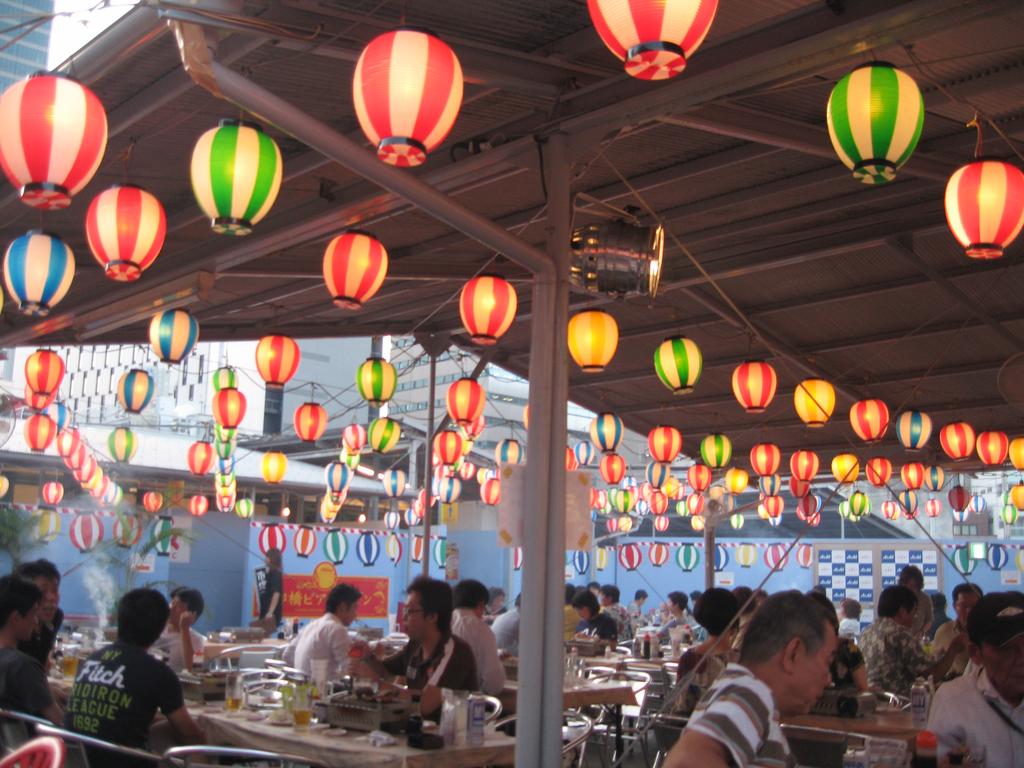
The next day T and I went to a “beer garden” – a sort of Summer tradition here to hit these places, usually on the roof of a building so you get a bit of breeze, decorated with plastic lanterns and full of middle-aged ladies making sure they get their money’s worth of the all-you-can-eat deal usually on offer. It was OK, but run by the wholesale fish market and we expected better things in the food section. Of course beer is beer, and a few mugfulls of well-chilled lager always go down well in the Nagoya humidity.

11th~12th

  • A muggy Sunday, but there are already hints of the coming Autumn. The rice is yellow, many fields have already been cut and there is smoke in the air from the burnt leftovers.
  • Lots of picnickers by the river.
  • A gang of aging bikers – must all be over 50, maybe 60. You don’t hear the “bosozoku” urban bikers so much any more – the roar of dozens of unsilenced exhausts used to be a feature of Summer evenings – but these guys are different, on a tour of the countryside in a sort of Easy Rider thing. Quite quiet and completely unthreatening.
  • No typhoon damage out in Gifu, unlike Mie where number 12 hung about for days and dropped huge amounts of water. The hot chillies – habaneros and little “ishigakis” – are doing well this year, but the larger, less hot general-purpose red ones from Malaysia aren’t looking all that lively for some reason. Plenty of goya, and myoga too.
  • A nice cool evening with an insect chorus and an almost full moon (the “chu shu no meigetsu”) intermittently visible.
  • A beautiful fresh Monday morning gradually warms up as the day moves on.
  • Monday evening is equally beautiful – a magnificent harvest moon sees us home, accompanied by crickets.
  • Min temp 11°C max 30°C

18th~19th

  • Two typhoons bringing up the usual massive amounts of warm moist air from the South… with the usual result of sweaty sticky humidity up here.
  • In the supermarket car-park the sun hits you like a hammer. Lettuces are ¥298 each! (over $3) All vegetables are expensive in fact – could it be because of the rain?
  • Listening to wonderful Ghanaian Highlife music in the car, I suddenly realise what a privilege it is to be able to enjoy this, which was made by people in another continent, maybe more than 30 years ago.
  • Have an early night for once and get up at 8 am to be rewarded with a perfect clear morning. Later it clouded over with more of that humid heat we’ve long come to know and love.
  • A bumper habanero harvest. A small brown snake among the plants. There’s only one poisonous species here, and that wasn’t it.
  • A thunder shower about 3 pm.
  • On the way home the “higanbana” are out – right on time as usual.
  • Min temp 19°C max 28°C

25th~26th

  • Beautiful Sunday morning, although it clouded over a bit later. Typhoon 15 blew away the Summer and suddenly it’s cool. What a difference a week makes! From sweltering to shivering in a few days. Last Sunday evening a T-shirt was comfortable, but now outside with a long-sleeved shirt and pullover (sweater to you Americans) I was still huddling near the fire.
  • There are still a few goya left, but we’re coming to the end of the season. There are lots more habaneros – with any luck the chillies will hold out through October and give us some kind of harvest.
  • A visit from the local builder. We want our rotten tatami matting replaced with a wooden floor. Tatami’s very ethnic and cool, but ours was way too old, and full of mould and biting insects. They cost more than 10,000 yen each, and in this house which is only opened up for two days a week new ones would soon go mouldy again, so we figured wood would just be more pleasant. A lot of the supporting timbers under the floor are in bad shape too so a fair amount of work is involved.
  • The max. and min. thermometer is broken: the min. marker falls back to the mercury. I’ll try just laying it on its side.
  • Min temp ~15°C (guess) max 25°C


Fireworks 29 September, 2011

Filed under: countryside,customs — johnraff @ 2:17 pm
Tags: , , , , ,

Fireworks are a feature of the Japanese summer and the town nearest our country house has a display every year in mid-August. This year it happened to be a Saturday so we took an extra day off, gave ourselves a three-day weekend, and went into town for the summer festival. There are big displays in other places, which draw hundreds of thousands of people, and our local fireworks don’t compare in scale, but they’re very enjoyable. The location is a fork in the river which runs through the town centre; the fireworks are set off from a spit of land between the two branches, and you can watch from the banks, so you get quite a close-up view, while the sounds echo off the hills around. The impact is, if anything, superior to that of a monster display viewed hundreds of metres away over a sea of people. A lot of young folk come back from their city jobs for this (fewer yukatas and more short-shorts this year) but there’s room for everyone to find a place to sit down with a view and a generally relaxed atmosphere. The finale was an incredible barrage of explosions. Was there enough air left to carry all that sound?

So the fireworks were good as usual (see the slide show below) but hardly anyone stayed for the Bon-dancing afterwards. The tunes are all from another town (the famous Gujo Hachiman) anyway. We were planning on some sushi, but they were closed, so it’s “ramen” noodles. The owner of the ramen shop seems to know everyone in town. A full moon sees us home and we have a final beer outside. There’s supposed to be a meteor shower due, but we didn’t see any.

This slideshow requires JavaScript.


Farmlog 7th ~ 29th August 2011 28 September, 2011

Filed under: countryside,food & drink — johnraff @ 1:50 am
Tags: , , , , , , , ,

7th~8th

  • A real Summer day for once: blue sky, summery clouds… and a blazing sun! It’s hot! The first supermarket car-park is scorching in the way only a supermarket car-park can be. The asphalt soaks up the sun so you get grilled from above and below simultaneously.
  • But by the time we get to the second supermarket – there are now two on our route – it’s already clouded over and extra humid. The cicadas are hitting a peak.
  • This week there are lots of nice fresh vegetables at the ¥100 stall so we stock up for Raffles and for ourselves: long shiny black eggplants and round green ones, various kinds of capsicums, perfect cucumbers and delicious tomatoes. Tomatoes show up less often these days so we’re lucky.
  • It’s cool when we leave the car at our house and there’s a chorus of welcome from the cicadas and uguisu. After a bit of work, though, the humidity gets you covered in moisture. Likewise the floor and tatami.
  • I had been a bit worried if the deer had got to the chillies, but they were OK. Not, however, the yams, which had had all their leaves eaten off by some animal. Saw a “mamushi” snake while fixing the hole in the netting the leaf-eater had probably come through.
  • On Monday there was more fierce hot sun and that humidity again, so it’s hot even in the shade. Half a dozen different insect voices fill in the background.
  • Bitten by leeches on wrist and toe. These creatures are affecting our quality of life here. Not in a positive way.
  • A baby rabbit appeared round the side of the house.
  • Min. temp. 19°C max. 32°C

13th~15th

  • We took an extra day off this week so we could take in the firework display at our local town on Saturday. This was our Summer Holiday but it was OK actually. Will post some pics of the fireworks soon. Anyway, we’re thinking of a trip somewhere at New Year maybe, when it’s easier to take time off.
  • A blazing hot Saturday, as it turned out. This is real summer heat – up to now was just a sort of extended Rainy Season – the humidity’s still too high though.
  • Traffic jams everywhere because this is the weekend just before “Obon“, but Nagoya is quiet. We catch some of the traffic on the road out, though.
  • The first supermarket car park is a furnace, unbelievable.
  • Unpack, a quick snack and it’s time to head down town for the fireworks, armed with fried chicken, “edamame”, beer and non-alcoholic “beer” for T who’s volunteered to drive.
  • Sunday is hot too; you can’t spend long in the sun, so do some general pottering about. Take the lid off the compost to try and dry it out a bit. If compost gets too wet, which ours always does, it doesn’t ferment properly and smells pretty bad.
  • The yam leaves have been eaten again but the net looks undamaged so it might have been some small animal – a rabbit? Maybe the parents of that baby we saw last week? The grass nearby has been nibbled too, so it could be.
  • Late afternoon we’re covered over by black clouds, followed by a good half hour of continuous thunder and lightning, some of it quite close by. It rains hard for a while, then it all goes away, the sky is clear and the temperature drops by an amazing 8°C: almost chilly!
  • Dinner under an almost full moon with a splendid insect chorus. Deliciously cool. Aah… having an extra day off makes quite a difference.
  • On the radio someone plays a 15 hour special of cover versions of all the beatles’ songs.
  • The insect voices are slightly different every day.
  • T dries this year’s umeboshi pickles in the sun, then they’ll keep. Perfect hand-made umeboshi sell for over a dollar each! T’s can compete easily for taste, but there might be a couple of spots here and there. Ah well.
  • A big black and yellow dragonfly flies into and out of the house.
  • Leave early to catch a film in Nagoya – “Tree of Life”, but I was pretty unimpressed.
  • Min. temp. 19°C max. 32°C

21st~22nd

  • Sunday is cold and rainy – is this the end of the summer?
  • The first “matsutake” mushrooms appear in the supermarket. Once plentiful, these are now an expensive treat, appreciated by Japanese (including T) for the supposedly wonderful aroma. To me, they’re just another mushroom. I like mushrooms for sure, but at 2000 yen each? Yes, that’s over 20 dollars for one mushroom! Anyway, these were from China.
  • That evening a long-sleeved shirt was called for, the first time since… May?
  • Monday was better with patchy clouds and a fresh breeze, but later slipped back into the familiar mugginess.
  • Visited by one red dragonfly. Masses of these will appear over the rice paddies in autumn. Two pigeons show up, probably to check out the sansho berries, but soon leave.
  • Regular stream of lorries on our usually quiet road, carrying gravel up and timber down. Are they building another road through the mountains, on some leftover budget?
  • Min. temp. 19°C max. 30°C

28th~29th

  • We set off in some trepidation – there was very heavy rain during the week and some people were evacuated in a nearby town. Are the chilli plants OK? Is the house OK?
  • The Valor (supermarket #1) car park is the usual oven. Inside, rice from Toyama is 40% more than from Miyagi, where they were affected by the nuclear accident. It’s silly really, because this is still last year’s rice…
  • The house and chillies are OK – the rain here wasn’t all that bad apparently. Two chilli plants are down and need some support, and there’s a wet patch on the floor in our entrance. You’d swear the roof was leaking, but the ceiling and floor upstairs are perfectly dry. Is it groundwater? No, there’s a two foot deep square pit near the front door – once used to store vegetables – which is dry. It must be condensation when the moist air from outside meets the cold floor surface, but there’s a lot of it!
  • Monday breakfast of exotic leftovers. T had made a salad of fried eggplant strips, cucumber, gouda cheese and a handful of “edamame” (fresh soy beans), with an oil and vinegar dressing. Simple colours of brown, green and yellow – no flashy tomatoes or red peppers – I should have taken a photo but I was too concerned with eating it. With a slice of brown bread: delicious. We also had some leftover Inari sushi. This is sushi rice – slightly sweetened and vinegared – in this case mixed with sesame seeds and chopped myoga and stuffed into skins of fried tofu which had been stewed with sweetened soy sauce. The taste is less complicated than it sounds, and also delicious.
  • A reconnaissance flight of two red dragonflies checking the place out for the hordes to follow soon. It’s still very hot, but the breeze is hinting of autumn.
  • T picks more myoga. I must make Myoga Chicken for Raffles – a seasonal treat!
  • Listening to the DPJ leadership elections on the radio. Maehara is the most popular candidate by far, but he doesn’t get on with Ozawa who still has plenty of strings to pull, so the job goes to the more boring Noda.
  • Min. temp. 20°C max. 29°C
 

Myoga 9 September, 2011

Filed under: countryside,food & drink — johnraff @ 2:56 pm
Tags: , , ,

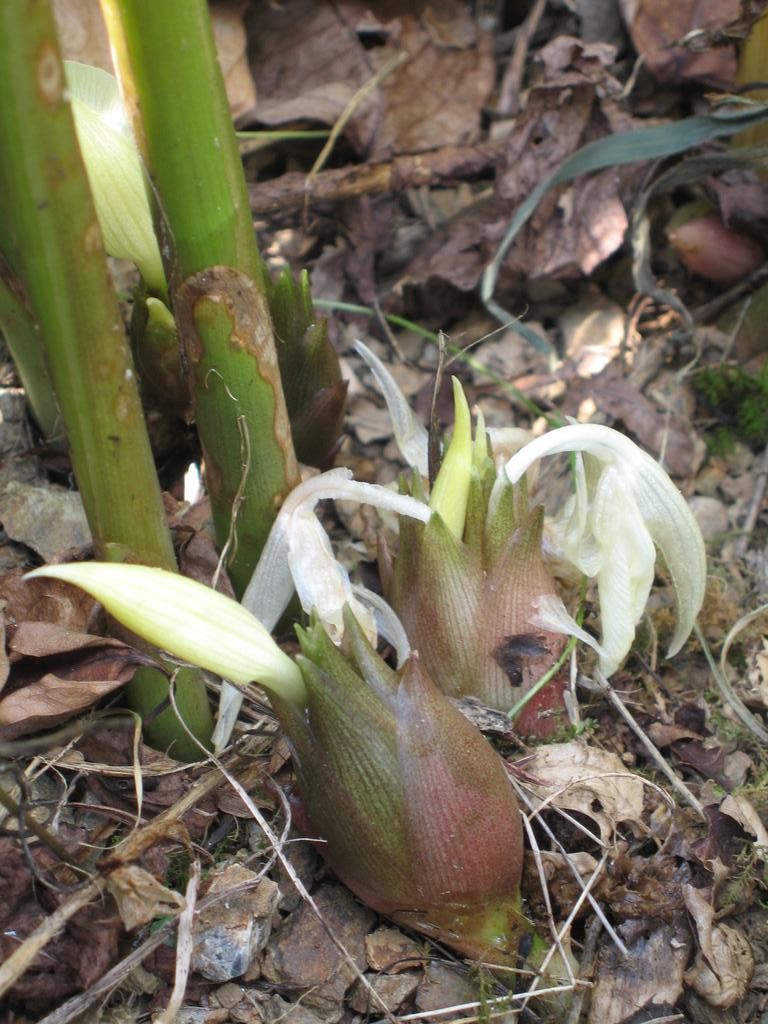
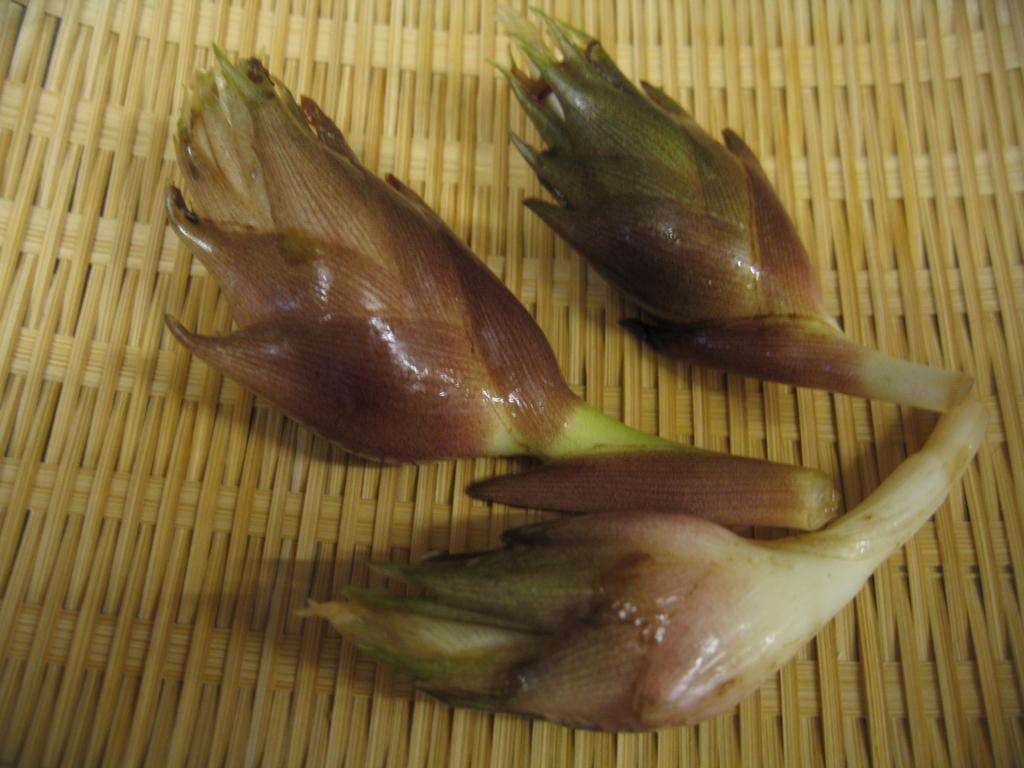
This is funny stuff. Myoga is a kind of wild ginger that grows freely around the house with no help from us at all; although it dies down in the winter it’s quite frost resistant and always comes back up. There’s no thick root to speak of though, in spite of being in the ginger family. What is used sometimes in Japanese food are the flowers, or flower buds. These are small and pink, and appear from the ground around August. You should pick them while they’re still buds, before the small yellow flowers start to emerge, which means searching around under the plants in the sticky heat, fighting off leeches and mosquitos, trying to find the buds when they’ve just shown above the ground and are still firm.

Once they’re picked you can slice them and put them in miso soup, add them to pickled eggplant or even put them in fried rice. Myoga has a very special fragrance which is hard to describe – sort of floral and bitter at the same time. It’s quite possible not to like it at first, and too much is definitely on the astringent side, but it’s one of the tastes of summer. Interestingly, there’s a “wild ginger flower” used in Southeast Asian cooking too, called bunga kantan in Malay. I was surprised to find one day in Singapore that it tasted almost exactly like myoga, although it’s bigger and longer, and the flower that comes from the bud looks quite different. There they sprinkle it on salads or put it in fish curries. It goes especially well with sour flavours like tamarind.

At Raffles we were delighted to have this authentic ingredient at hand, and use the myoga leaves to wrap our steamed “otak otak” spicy fish paste, sometimes make a cucumber and myoga salad and also put it in “myoga chicken” which is on our blackboard right now. This is an adaptation of a Penang dish called “ayam tumis” which also contains lemon grass, galangal, fresh turmeric, shrimp paste and tamarind. I’ve boosted up the myoga content so you can really taste it, and I think it’s pretty good. It looks just like a curry, and you eat it the same way, with rice, but there’s no spice in there which would be found in normal “curry powder”: if you don’t call it a “curry” though, people won’t order it…


Town Birds 2 September, 2011

Filed under: city — johnraff @ 2:47 pm
Tags: , ,

We had another visit by the bulbuls yesterday – they drop in every now and then. Only one this time and he just flitted around our tree a couple of minutes, said a few words and went on his way. The grand project to concrete over this planet has meant less and less room for other creatures, and even in my lifetime things have changed quite a bit. Twenty five years ago or so, here in Nagoya you could hear the uguisu‘s warble in the spring for a few days till he went on to the hills, but no more. There were swallows who built their nest under the eaves of a restaurant right on the corner of a busy crossroads near here, but they gave up when the place was done over a couple of years ago. Even so, there are still a few birds who come round to our small garden quite regularly. The bulbuls have been regular visitors this summer, turning up once a week or so, but they aren’t the only ones.

The sparrow is supposed to be disappearing from cities worldwide, but they’re pretty common round here, drinking the water from the dishes under our plants on the balcony and checking out the plants for insects, seeds or whatever it is that sparrows eat. Pigeons quite often come round in the spring to coo from a top branch of our tree. They are not T’s favourite bird, they leave big splashes of droppings on our entrance path and she doesn’t like the cooing either. Last year they tried to take over the bulbuls’ nest after they were finished with it, and this year built one of their own. Usually if you give the tree a good shake it will scare the birds out of it, and repeated a few times seemed to get rid of them last year, but this time they were more determined to stay put. Eventually I got a long bamboo pole and was just able to knock the nest down from our upstairs window. There were already two eggs in it, which got broken of course. This was why the pigeon in the nest had been so obstinate. I felt quite bad about it, and the pigeon looked heartbroken, sitting on a nearby power line for a while. They haven’t been back since, so I suppose they finally got the message.

Top of the food chain are the urban terrorists, the crows. Even we humans give them some respect – apart from being big, with long sharp beaks, they’re pretty intelligent. In the cities they’ve taken over, it’s pretty easy to make a living so they have free time to get up to all kinds of mischief. A while ago they were making more noise than usual and I found a whole load of them sitting on the power lines opposite our place, having a major conference or something. Then I looked down and saw a dead one on the road just below the electricity pole. Did it get electrocuted? Were they holding a funeral? Anyway, when you see them close up they’re big – getting on for the size of a chicken! They are really ravens rather than crows, I suppose.

Our favourites, though, would have to be the bulbuls. They’re not pretty or anything, and their voice isn’t what you’d call mellifluous, but they seem sort of friendly, and have taken to building their nest in our tree for the last few years. Apparently they prefer to build near human beings because it helps to keep the crows away. This year they took ages about it, but eventually a couple of chicks were hatched and left the nest at the end of June. A bit early, we thought, they still looked a bit small sitting in the tree branches and that evening there was an enormous downpour. The next morning T saw the parent birds flying anxiously around the gap between our place and next door. We feared the worst: did the rain wash the chicks down? Did one of the local cats get them? That seemed to be it.

However, a week later there were a couple of bulbuls sitting on a low branch of our “basho” tree, looking at me with their heads on one side and saying something. I don’t speak bulbul unfortunately. They looked a bit small to be the parents, so maybe the chicks survived after all? The same birds (I’m presuming they’re the same) have been back at irregular intervals throughout the summer, just for a couple of minutes, then off again. Is it the same pair who build that nest every year? Is it the same family? Has our tree just been marked as an OK place for bulbuls in general?


Farmlog July 3rd ~ 25th 2011 27 August, 2011

Filed under: countryside — johnraff @ 2:59 pm
Tags: , , , , , ,

Summer in Gifu continues:

3rd ~ 4th July

  • We’re late this week and arrive on a moist Sunday evening. It’s extremely humid and mouldy, even a thorough vacuuming of the tatami floor can’t get rid of the smell.
  • The insects are warming up for their summer serenade, but there’s no sign of the fireflies this year. Did the carp in the pond eat all the larvae?
  • The yams that T planted had all their leaves eaten by some animal. I found a small gap in the net round that field and fixed it. Luckily the chillies were OK.
  • Got some weed-cutting done. Lots of buyo (nasty little black flies), but no leeches, amazingly.
  • Cloudy and wet the whole weekend.
  • Min. temp. 19°C max. 32°C

10th ~ 11th July

  • Tsuyu-ake (official end of the Rainy Season) is very early this year; Sunday is hot and humid, but the clouds are summer clouds – fluffy cumulus. not the grey blanket of the tsuyu.
  • The heat persists even out in the country and our floor is still wet. Maybe it’ll dry up in a week or two.
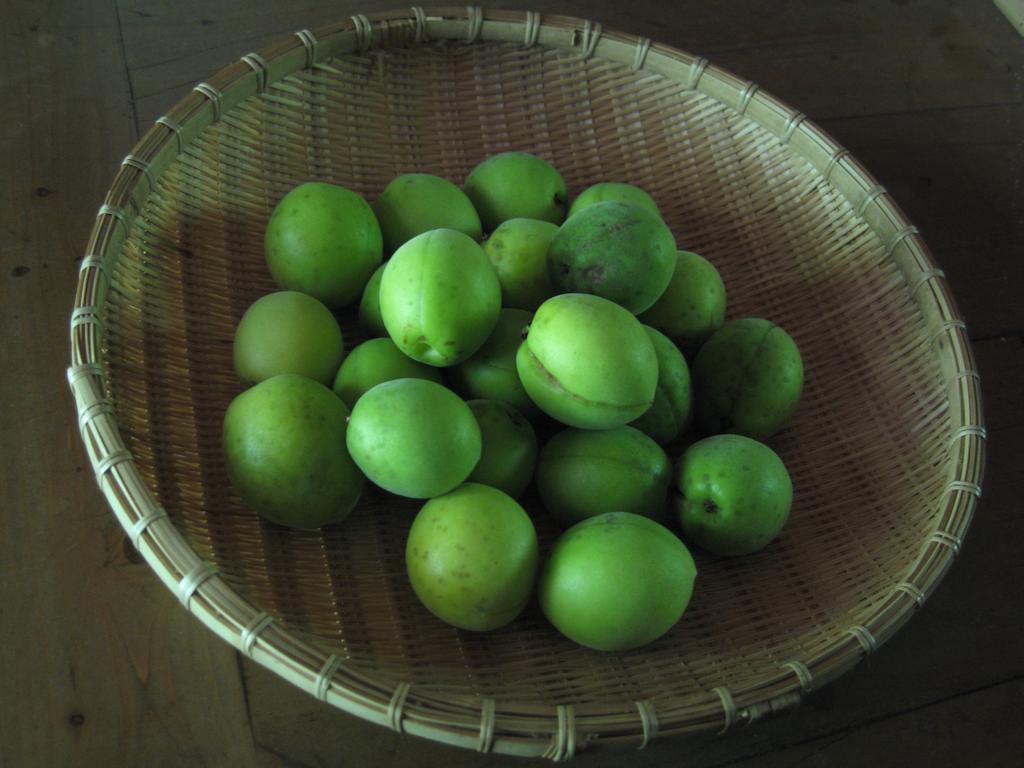
  • A bumper ume harvest. Something like a sour plum or apricot, this was originally imported from China as a medicine apparently, but is long-established in Japan. This year the tree branches are bent down with fruit and we pick 15Kg in an hour or so. Apart from umeboshi pickles and umeshu liqueur, you can make a drink by just putting them in a jar with rock sugar for a few weeks. Mix the syrup with water – good on a summer afternoon.
  • Saw a single firefly!
  • Monday continues hot and humid, but sometimes there’s a refreshing breeze – quite different from Nagoya, where any wind will have blown over acres of sun-baked concrete and comes on like something from an open oven door. We also had a visit from the uguisu, which was thoughtful of it.
  • Min. temp. 15°C max. 33°C

17th ~ 18th July

  • Typical summer clouds and humidity – a baking supermarket car park.
  • Shiso is a herb that looks a bit like a nettle – maybe a relative of basil? It comes in green and red varieties, the green is good in salad-type things and the red is used for umeboshi pickles. They both have a clean smell and antiseptic properties, but this year apparently everyone’s had huge ume harvest so there’s a shortage of red shiso. Eventually the lady at the 100 yen stand was able to get some for us. T has a lot of work ahead and I suppose we’ll be OK for umeboshi for a while.
  • Voices: a noisy welcome from birds and cicadas. In late afternoon come waves of synchronized blips from some kind of cicada, slipping in and out of phase like an op-art painting, moving up close, sometimes down the valley. The effect is very psychedelic. The morning cicadas do a continuous stream of sound that just blends into the humid heat. Just after dark there’s a strange cry from somewhere behind the house. A deer? A dog? Different insects take over in the evening – is autumn starting early? In the morning we hear a new bird – a voice I haven’t noticed before.
  • The humidity continues unabated. There are still some wet spots on the floor. A light haze softens the sun’s heat a bit.
  • It’s been a dry week but there’s a typhoon coming so we should get some rain.
  • But… no leeches! Could they be finished? Lots of lizards though. They’re much nicer than leeches let me tell you.
  • Min. temp. 18°C max. 33°C

24th ~ 25th July

  • Pleasantly cloudy on Sunday so the supermarket car park on the way out is less bakingly hot. That sun can hit you like a hammer.
  • Vegetables: lots of eggplants – I’ve already made a (very nice) eggplant pickle though. Some tomatoes. One place on our route has especially nice tomatoes from a local grower but they’re often sold out. No cucumbers. Why? They’re expensive in the supermarkets too. (We now have two supermarkets to check out on our route. )
  • The big Malaysian chillies aren’t doing well at all. Maybe the soil in this year’s field doesn’t suit them. Maybe I let them grow too big in their pots before planting? They looked so vigorous in Nagoya… The small hot varieties are doing OK though.
  • The house is slowly drying out, but there are still damp patches. Not wet though.
  • The insect chorus is building up.
  • The nozenkazura (Chinese trumpet vine) is in full bloom and looking good.
  • Lorry-loads of timber coming down from the hills. Are they building a road somewhere?
  • Pampas grass is a weed! People grow it in their gardens in Europe, but here it’s almost impossible to control. Keep hitting it with the weed-cutter: three times a year for three years they say. Or try glyphosate – that seems to work.
  • Next week Daihachi Ryodan play at the Ichinomiya Festival which might be fun, but means we miss a weekend here.
  • Min. temp. 18°C max. 29°C
 

Radiobeef and the missing 143 16 August, 2011

Filed under: food & drink,news,politics — johnraff @ 2:42 pm
Tags: , , , , , , ,

This isn’t good. It was about a month ago that the first radioactive beef started showing up in the consumer food chain; at first it was from cattle in the Fukushima area that had been fed rice straw contaminated by the reactor explosion. That was bad enough for the local farmers who had been struggling to get their lives restarted after the earthquake, but it now seems that straw from the danger zone – a major rice-producing area – had been sent to all kinds of places and traces of radioactive caesium have been found in beef from quite different places. This is bound to have an effect on sales of (delicious) Japanese beef, both here and, maybe more importantly, in Hong Kong, China and Taiwan where all kinds of Japanese food has been selling to the newly rich. ($100 apples, anyone?)

More: it now turns out that the Tokyo power company responsible for the Fukushima reactor is unable to trace 143 people who worked on the clear up operation, in order to monitor their radiation exposure. A lot of part-time workers were taken on in a shambling chain of sub-contractors to sub-sub-contractors and the bottom end included homeless people and alcoholics hanging out on the bad side of the railway station waiting for a bit of work from the gangster brokers who came round. They were offered 2 or 3 times the going rate for dangerous work, but nobody seemed to care too much about where they went afterwards. Of course this is just an extreme example of the return to Victorian-era exploitation that capitalists have been organizing on a world-wide level, but this time even token attempts to be concerned for workers’ welfare have broken down.

The Japanese population as a whole are, as you can imagine, less than enthused about repairing nuclear reactors, still less building new ones. Nobody believes the government or power companies when they try to reassure us that everything will be OK. Coming on top of the annual August commemoration of the atomic bombing of Hiroshima and Nagasaki the mood here is very much anti-nuclear. Of course public opinion is fickle, people forget quickly and the nuclear power consortium of electricity companies, big engineering, corrupt public servants, politicians and the media will do their best to fight back. Nuclear energy looks cheaper than renewable alternatives, untill you include all the hidden costs, and there’s lots of palm-greasing cash available. Still, can we allow ourselves some limited optimism that the much-fabled Japanese Consensus is about to be reached, and a major policy switch is coming up?

Fingers crossed (again).